Sunday, September 25, 2011

The Quiet Places Where the Seasons Change

Hi!

All of you know by now that I take walks and purposely look at things that others might find ... er...boring?  Sometimes I think I've forgot the smaller things that fill in pictures of the vast Rockies or the shores of the Great Lakes.  I'm lucky that I live where I do, because there is so much to see and take note of, no matter what its physical size.
The Great Autumn Housecleaning is being conducted by birds stuffing themselves with seeds and insects, building up fuel for the flight south, groundhogs chomping through grasses, building layers of fat to hold them through their hibernation, humans laying in the harvest, horses beginning to think about their winter coats.  And the flowers of autumn, no matter where they are (in garden or field) are flinging on their glad rags before the onset of the Grand Silence over the winter.  And there is so much to see!
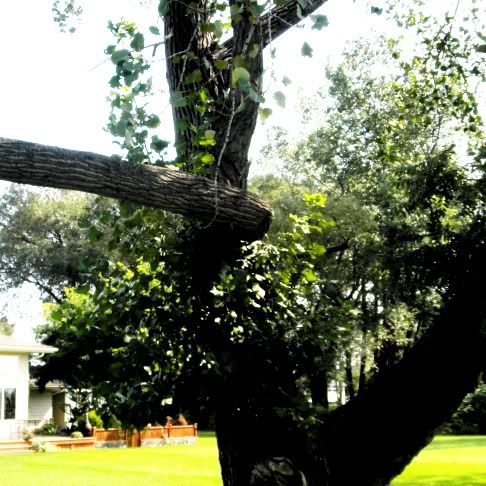

Yep, started off with a very strange looking tree branch.  I have no idea whether the branch was trained to grow this way, although that would seem to be the case.  But I had to take a couple of pictures of it...


Ooops, I forgot to tell you.  I am walking down Edgemere Drive, which, as its name indicates, runs along Lake Ontario, separated from the lake by a small waterway.  Instead of heading toward Cranberry or Long Pond, I'm going due East, past Buck's Pond.
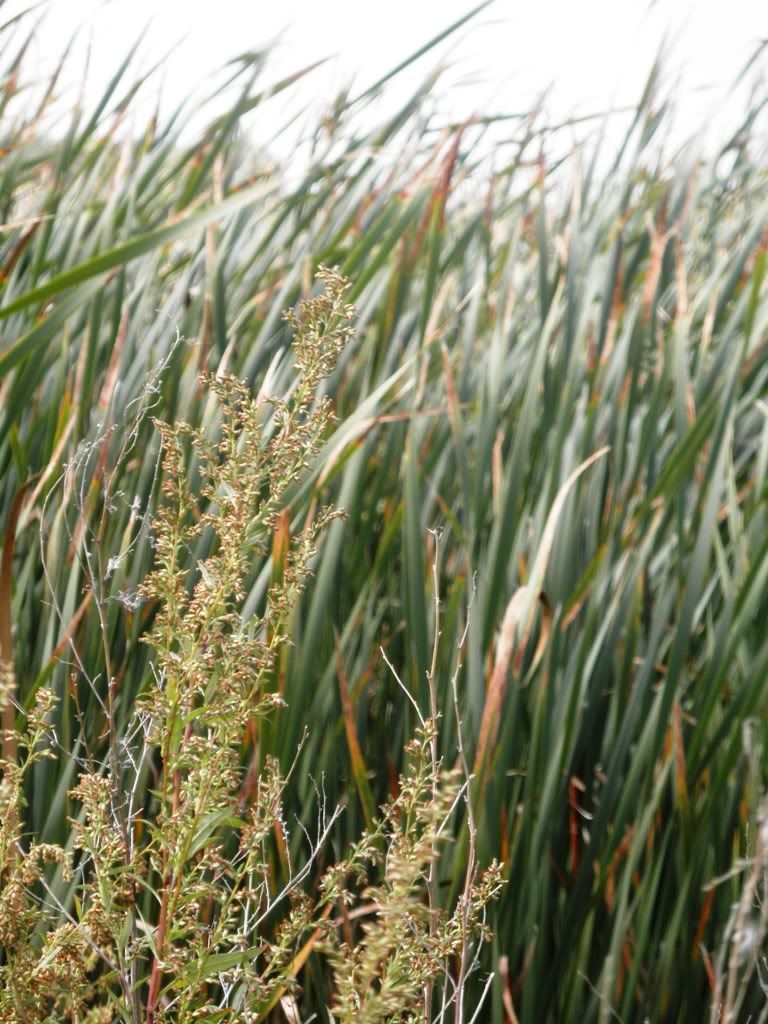


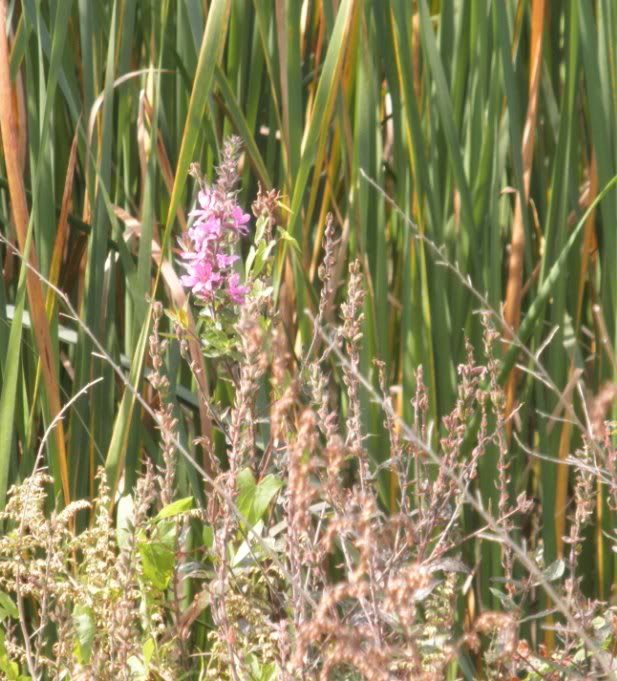
On the South Side of Edgemere, the cattails and their tall grasses swayed and tossed in a strong wind off the Northeast over the Lake.  I could hear the roar of the Lake in the background but couldn't see it across the inland waterway and the orderly march of lakeside homes right on the shore.  But, then, I didn't need to:  the NorthEast or Northwest Wind makes the Lake grumpy and it roars...

On the North Side of the Road, each homeowner has used his or her imagination to the fullest, sometimes falling back on flowers from a nursery, sometimes pretending to control the riot of wild grasses and plants.  The result is far from predictable  (and a lot of fun.  Why would someone put this there?  That sort of question springs to mind).
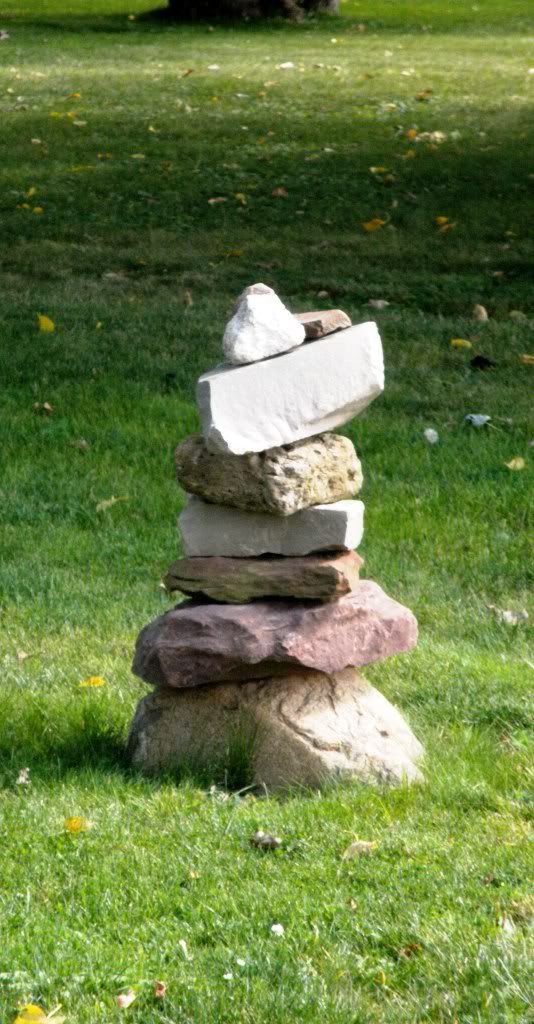


The technical name for this pile of rocks varies with the builder.  It's a means of marking a trail or a boundary or just a stopping point on a journey.  The Inuit call it an inuk.   I wonder if the owner built this, and, if so, what it means.  Was it purchased?  Did it come home after the property owner visited the Northern Territories in Canada?  The questions a pile of stone can elicit are many indeed!  (Snickers evilly at the thought of people wondering...)


This owner decided to trim a plot of wild growth so that it looked as if it had been specially planted.  Pretty ingenious and a great way of cutting down mowing!
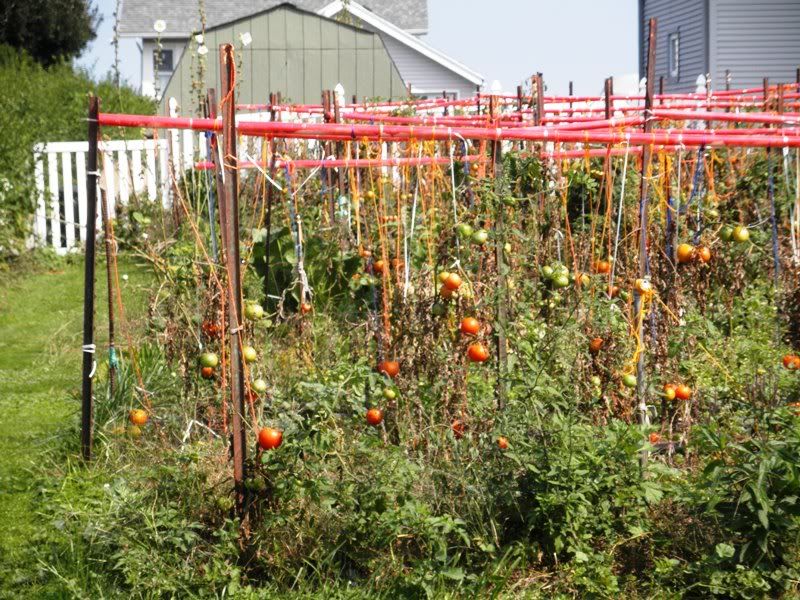


Until I saw these tomatos (which are about all that was left in this garden), I had forgot that I was walking along the rear line of everyone's property and snapping pictures of their back yards.  There are still quite a few tomatoes left on the vine - we haven't had a killer front, so the tomatoes keep right on showing up.
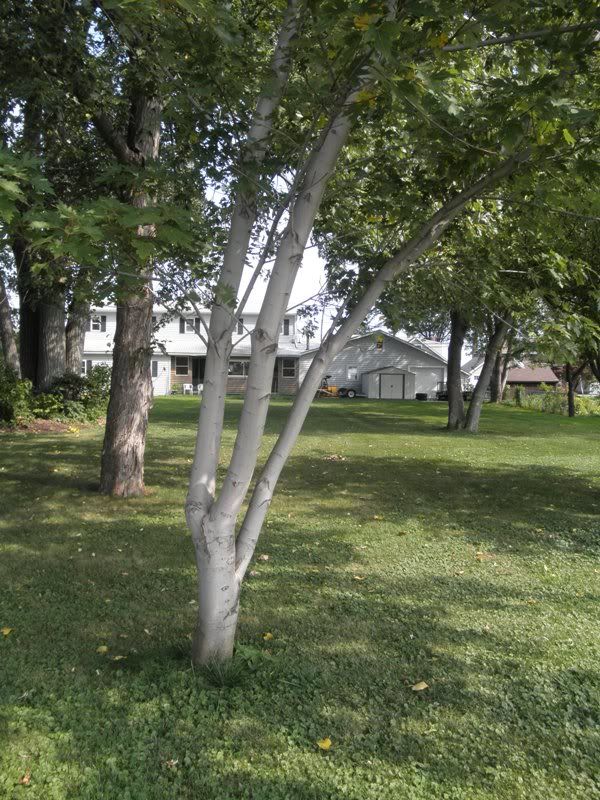


You know me - trees are the grand personalities of a place (I know, I know, some people actually think it's the house:  let 'em keep their illusions.)
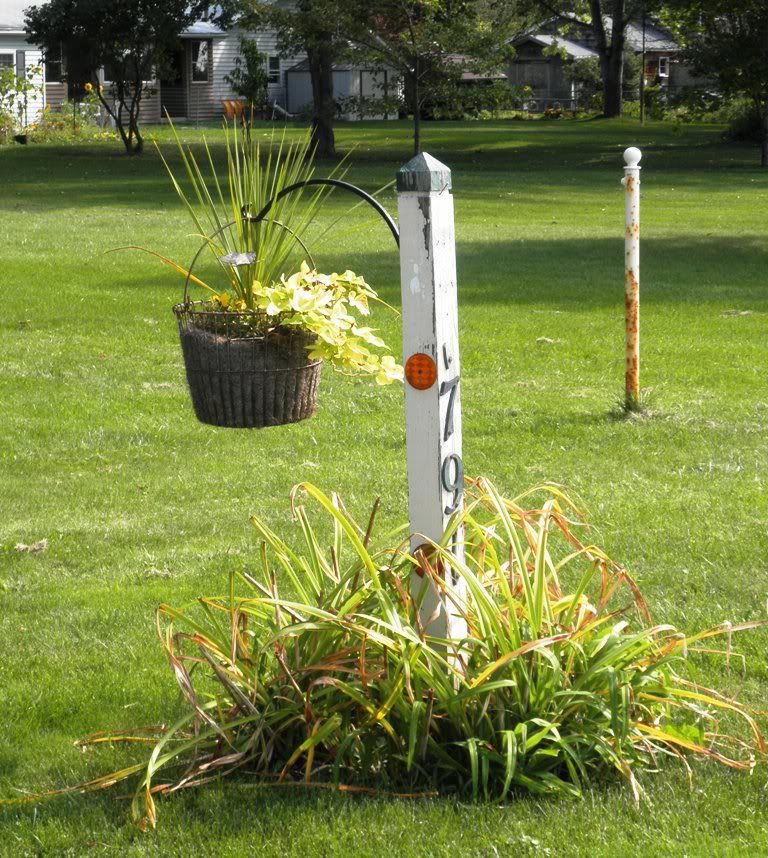


There were still planters out - seeing one metal post decorated and the next one rusted and standing quite naked, I started wondering (again!  What IS it with you, Cunningham?).  What were the poles originally?  Did the same homeowner own both of them? 


This is an old, bottom of the back yard fence and the plants that the owner set there.  The wood looks tired, but the fence is in pretty decent shape.  I guess back fences don't need to be painted and I'm kinda fond of the soft, grey color of the posts.


This is growing over another section of the fence.  I want to say that it's holly, but I may be way out in left field.  The leaves are changing color and there were some immature berries on the plant.


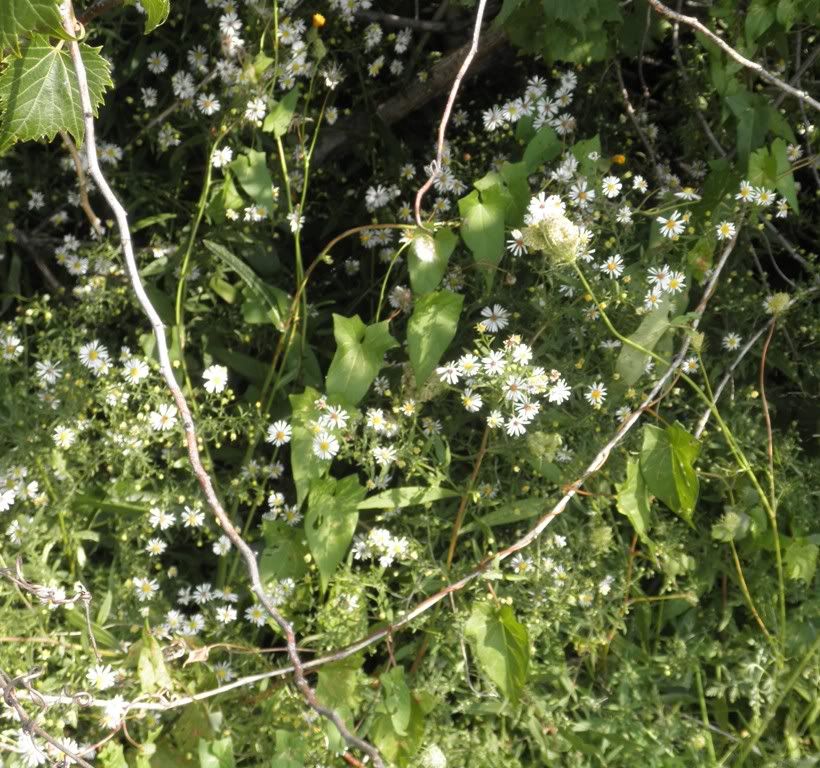
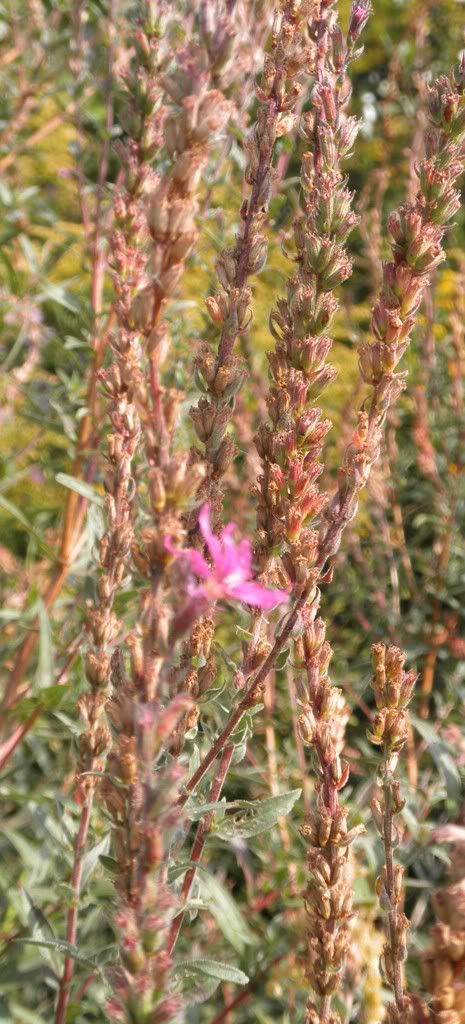
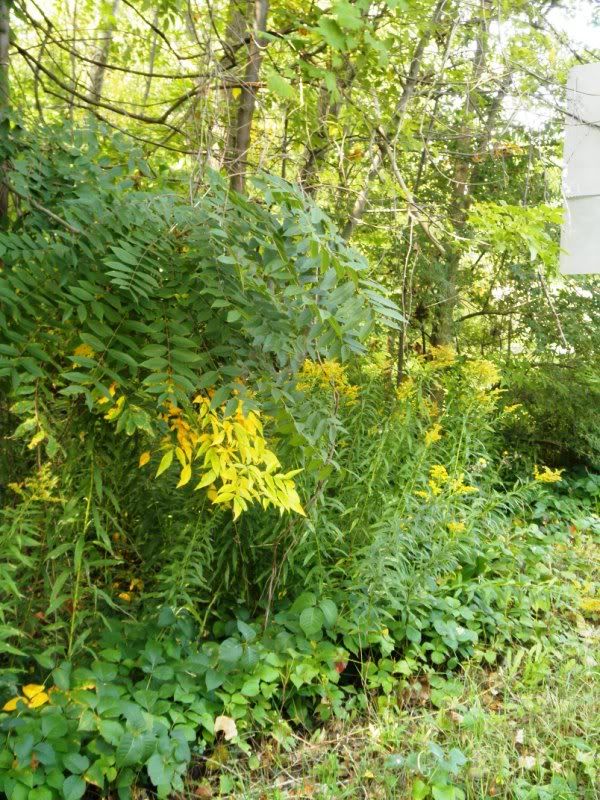
The North Side of the road is beautiful, and I'll be back in a week or so when the firebushes are more into fall mode.  But now I'm turning to the South side of the road.  Here the wild things have their way.  I'm going to put some pictures in and not comment too much.  Except to say that the small things are well worth the searching out.


This is staghorn sumac, just barely beginning to change color.  We'll keep an eye on it.
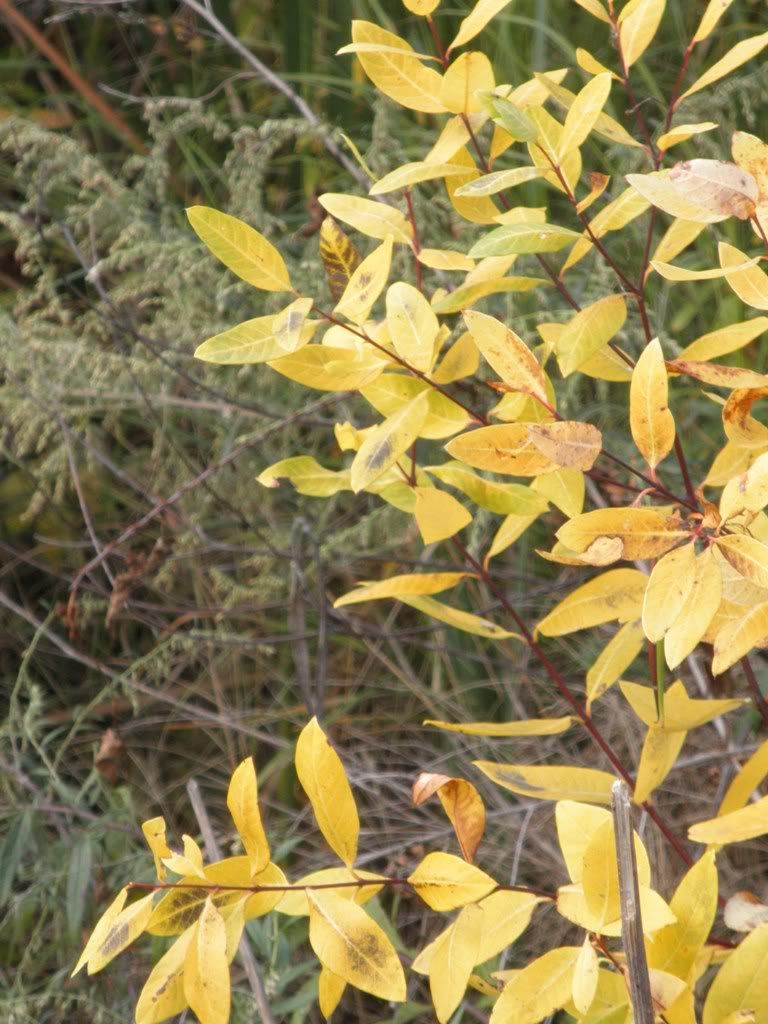


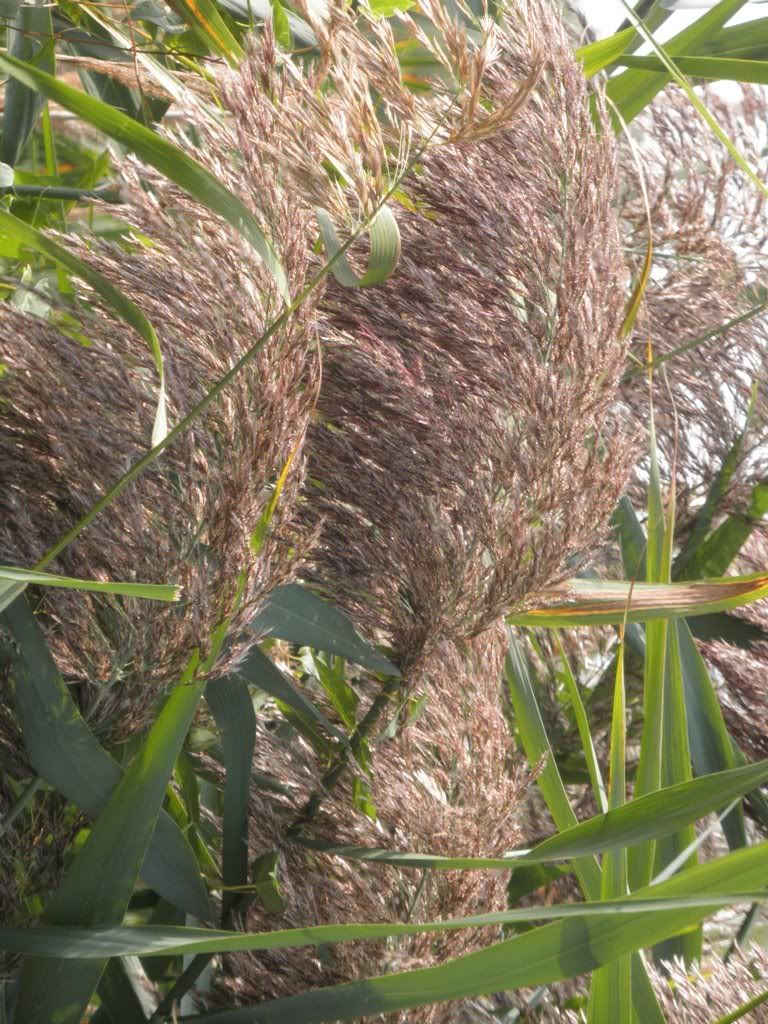
And behind it all, the great reeds and grasses of the edges of Buck's Pond (and every pond and inlet around these parts) hold sway.  They're considerably taller than I am by this time of year. 


This green marks the small wooded plot between the edge of the pond and Long Pond Road.  Here autumn hasn't made as much headway, although exposed branches are beginning to change color.  My car is parked in a tiny lot on the northwest corner of Long Pond and Edgemere, across from the Fire House.


Even here, there are dots of deep orange and splashes of yellow. 

It dawned on me that I hadn't taken pictures of the waterway (actually, I think, a man-made one) between the houses on the shore of Lake Ontario and the North edge of Edgemere Dr.  Here are a couple of shots.
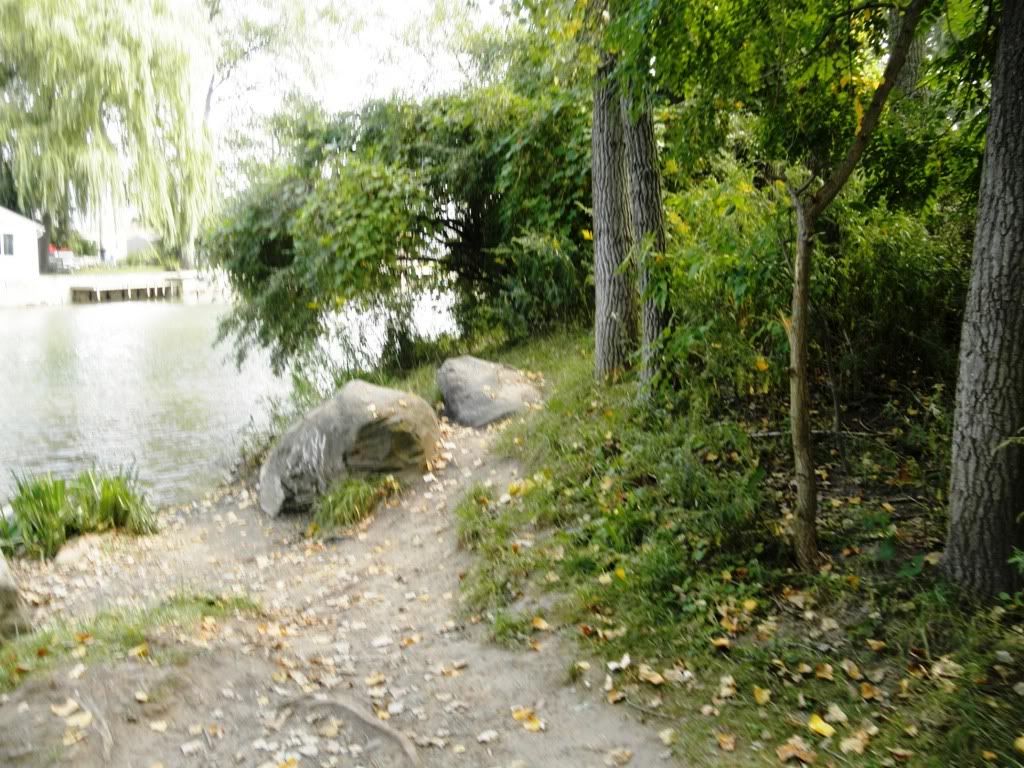


My car is about three feet off of the right side of the picture.  It was being shy, so I didn't take its picture...
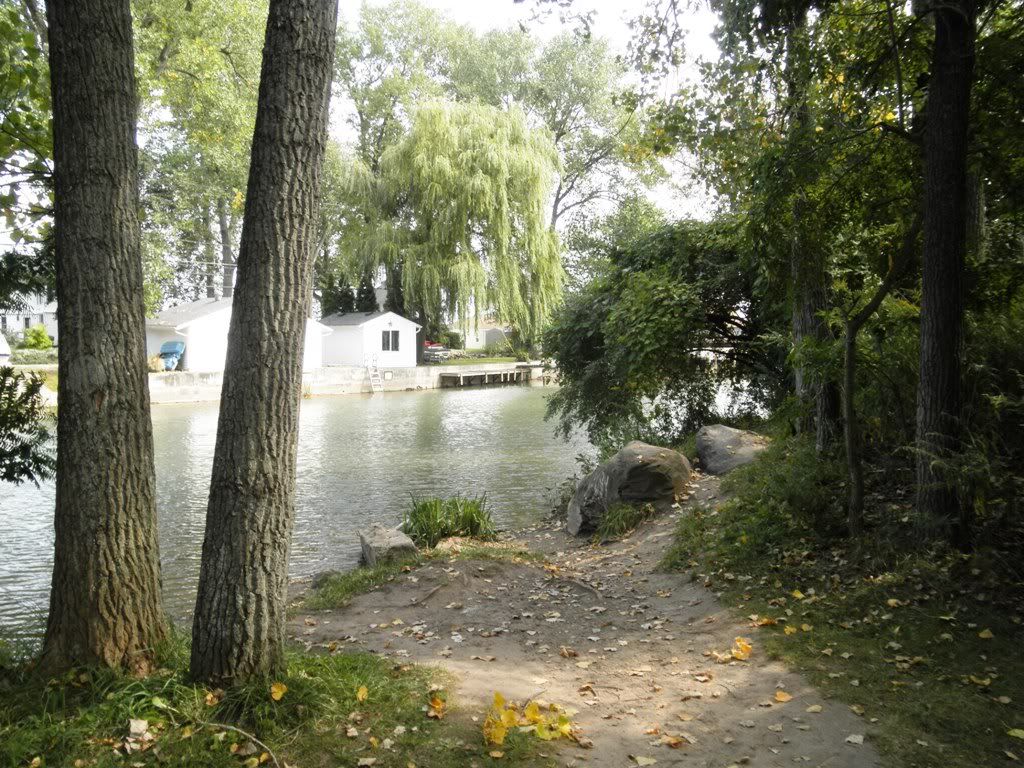


And there we have a wandering from 092311.  The trees haven't begun their real changes yet, although some of the early ones are shedding the green of summer...

But I wanted to look again at the things that we don't always have a chance to see.  (I'm like that...).  I hope you enjoyed!  P.S., I still owe you the rest of York Minster, and I know that.  I also need to continue the tour of Genesee Country Museum...ah the joys of having all this to talk about!  Lucky YOU!!!!! 

Hugs to you all and best wishes for a bright, long autumn!


Saturday, September 10, 2011

A little wander where I wandered once before

Hi!  On June 23, I posted a little wander that I had done over next to the Latta Road Wegmans.  I went back there yesterday (September 9) and took some more pictures.

I had really taken the June pictures on Jue 10th, so the two sets are 3 months apart.  This is going to be mostly pictures, but I wanted to put them out there to see the new decorations for fall that have sprung up there. 

Here we go!


As you can tell, it was a beautiful day!  Today was even better, but I'm glad I went out yesterday.  To orient you:  the store is off to the right.  This picture is of the stand of trees that walks along the whole skyline there.


This is from a lower angle and shows you the trees and the field (along with the clouds).


More clouds again, because it was a great day for 'em!


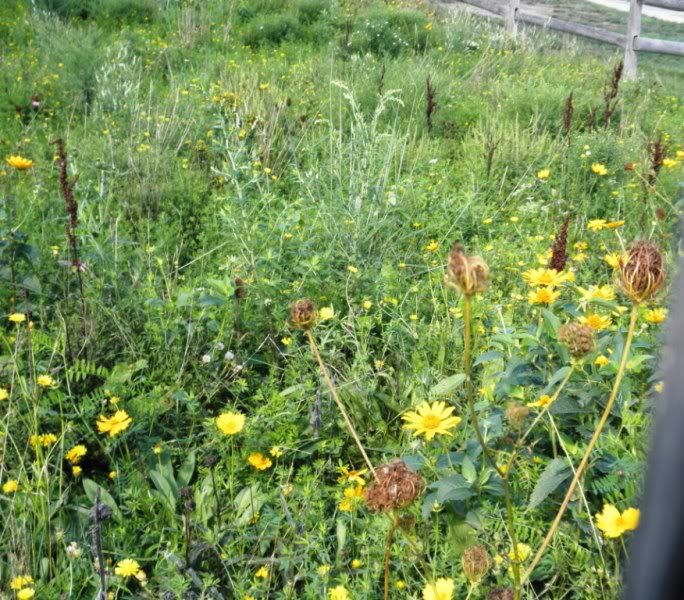
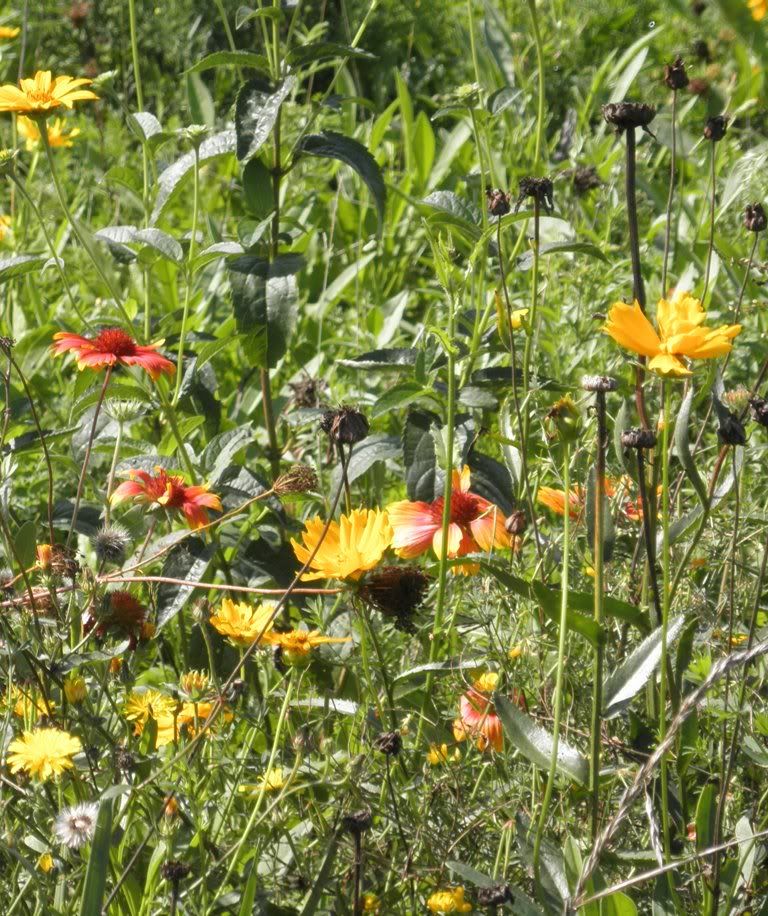
I know that sometimes fields like this look all hodgepodgy, and the impression someone might receive is that it's merely colorful chaos.  However, there's great beauty in the quiet little flowers that fill this corner of the lot.


I took this between the fence rails.  I don't know if I could get down and take a picture and then get back up without massive embarrassment.  Sooo, did some pretzeling and this is what I came up with!


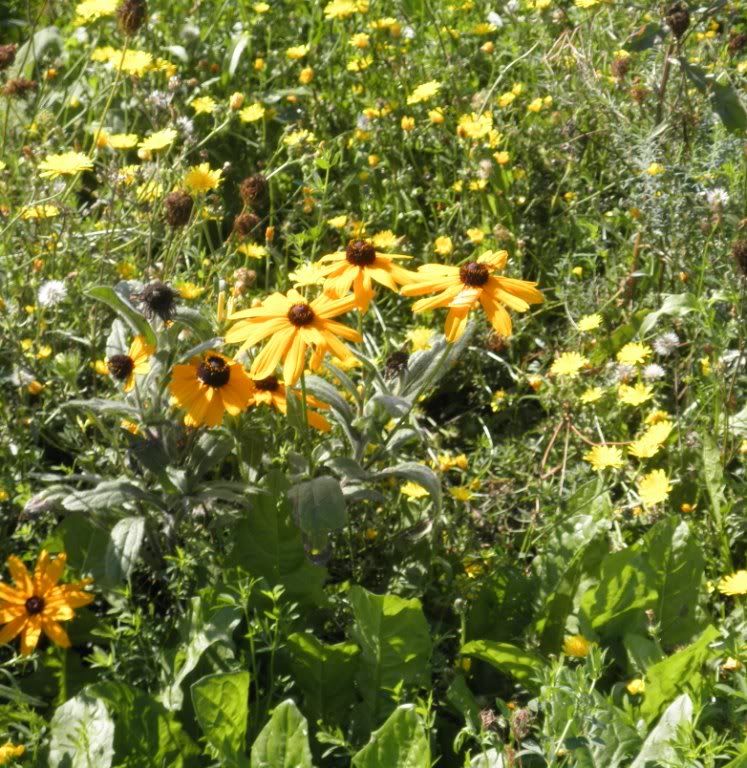
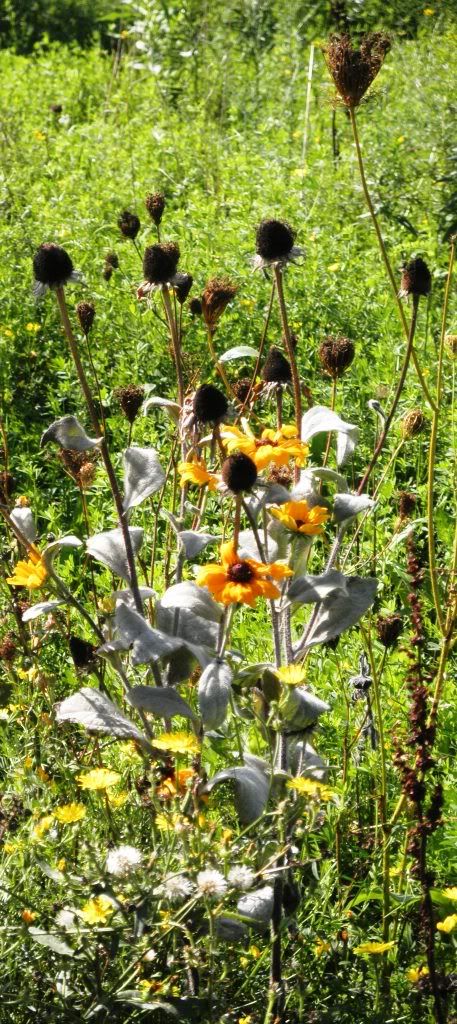
The first thing I noticed was that some the plants seemed to have been domesticated at one point.  These look like brown eyed susans, but I'm not sure.  Remember, I have little to no knowlege of wild plant names.  It's something for me to put on the list to learn! 

What I DID see, however, was that yellow has a wide range of colors, all the way from almost white to rich orange.  And that a great many of those are right here in this picture.


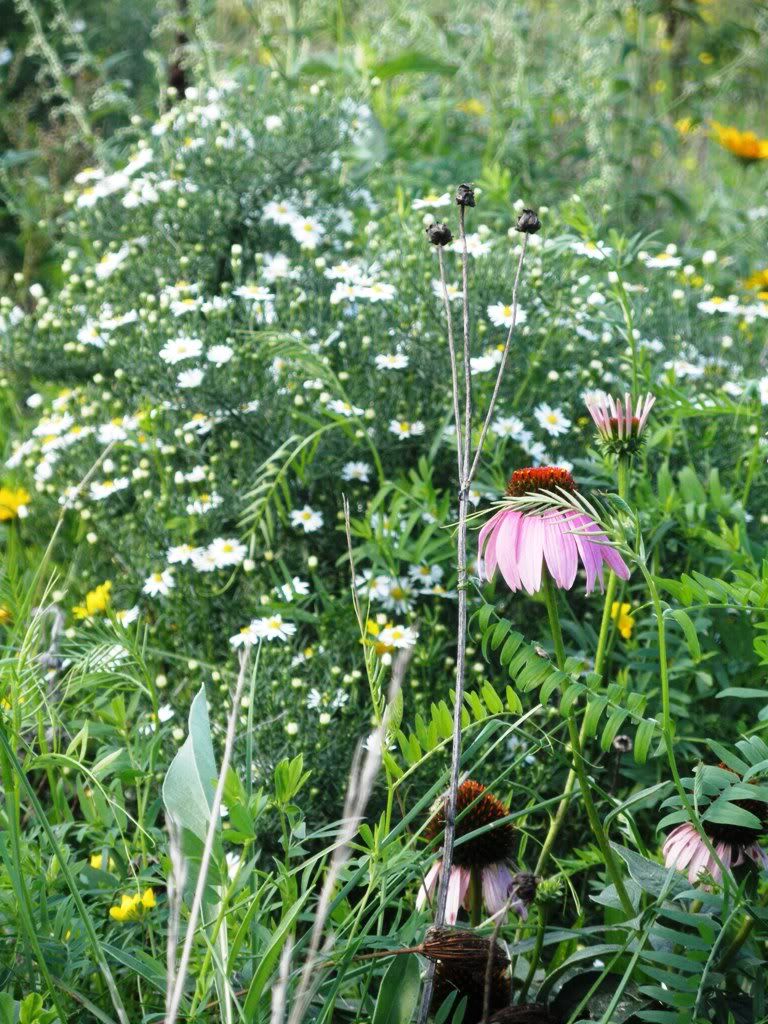
Sometimes, in among small white and yellow flowers, rather large and red flowers with drooping petals and a large, raised center appear.  This is echinacia, or coneflower, which is currently domesticated.  The few echinacia I've seen on this property must have come from somewhere local. 


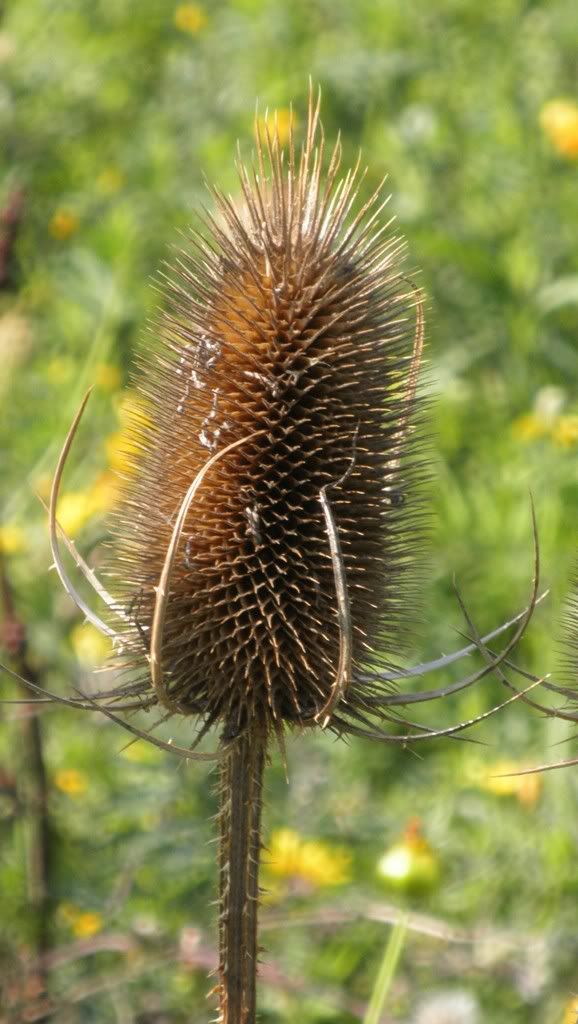
This is a thistle after the light purple petals have fallen.  This is one sticker-y plant, but it's also a study in brilliant design on nature's part.  We should become a little more aware of these types of plants, as they lend a sense of structure to an otherwise slightly confusing landscape.


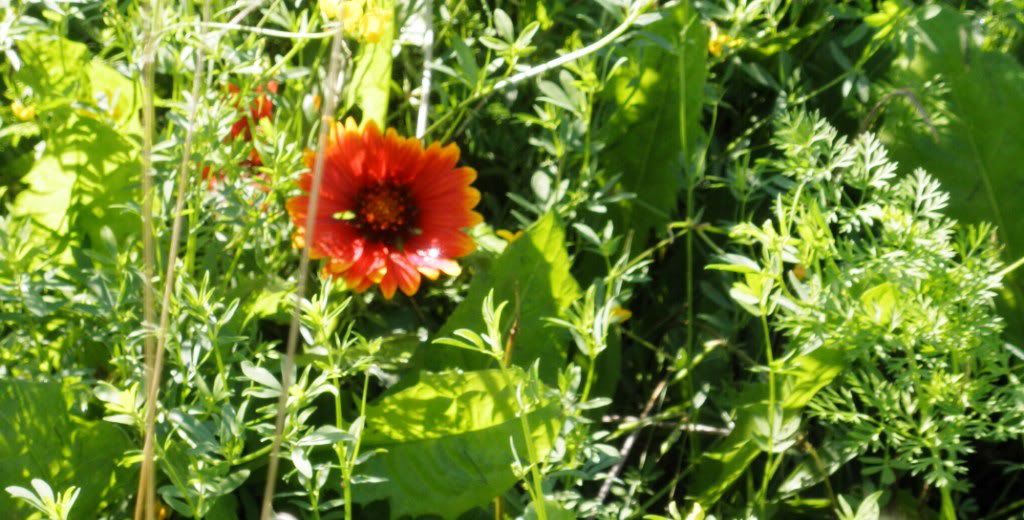
I loved the two or three different flowers and the range of color .  The flowers with the darker red on petals are blanket flowers:  my thanks to Karen in the UK and Lisa here in Rochester for the update!  I appreciate it mucho! 


This is a close in shot not only of the flowers, but also the leaves and they way that add some depth to the picture. 


I think that this is another domesticated flower that found it hadn't forgot how to survive in this world. 


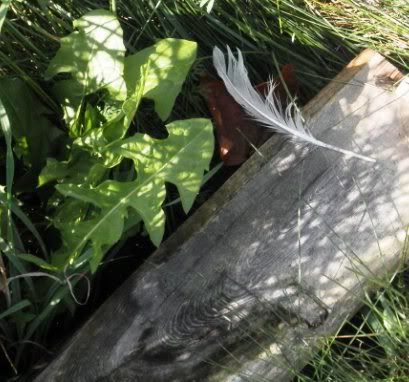
Even the birds are getting in one the fall cleanup.   The feather in the picture is from a sea-gull:  I found it snagged on the board and grabbed this shot.

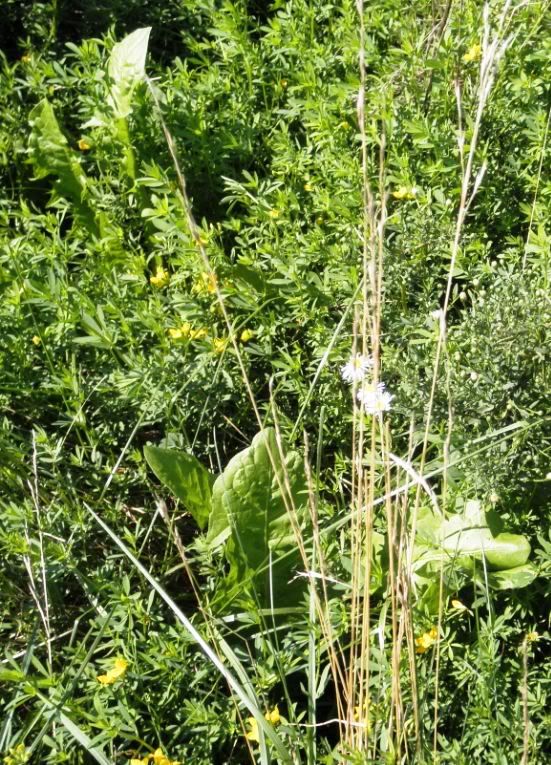
There doesn't have to be a lot of color.  In fact, sometimes, the reliance on two shades of green plus a stem of straw can provide more interest to the casual watcher.


And there you have it - a very brief wander to a place I'd already been.  But sometimes that's the real heart of ths wandering stuff.  To see what happens when the world moves at mach 8, all except for one corner in a parking lot near a Wegman's. 

Have a great day!  More soonly and we'll got back to England, I promise!!!  Please have a most excellent time looking at the pictures!  And, if you want to compare, remember, the other pctures are on June23.

Wednesday, August 24, 2011

Postcards from the Edge (with apologies to Princess Leia..er..Carrie Fisher)

I know, I know, I said I was going to do trees, and I will, I promise. 

But then, out of the murk that I laughingly call my conscious mind, came a "suppose".

One of the happiest things about traveling (if you're me) involves post cards.  Face it - they're generally beautifully done and present everything about an object or a place in a professional manner (well, I'll exclude those with jackalopes and big mouthed bass on 'em, just for this entry).

And there are places (Durham Cathedral for one) where general picture taking is verboten.  So Postcards have to do.  AND, if you're like me (heaven help you), there are certain things (old stained glass is one) that need to be photographed by a camera that weighs almost as much as the person toting it. 

Soo, in no paraticujlar order (random is fun!  Remember that - it will be your mantra going forward) here are a few of the postcards that I collected whilst roving through England.  I have a herd more (postcards come in herds or decks,  especially the postcards that are all connected together). but I'm not going to inflict them on you unless I relocate that mean streak I lost yesterday morning whilst doing the laundry.  (No, mean streaks don't turn laundry pink.  They turn it dapple.)

The picture of Salisbury Cathderal (the first one I'll post up here) is a small print sized photograph by Mr. Peter Brown of Amesbury, Wilts.


This looks like a detailed painting, but, indeed, isn't.  It's entitled Salisbuy Cathedral - Summer Flowers.

The remainder of the pictures are postcards - I will jot the company that produced the card when I can find it somewhere on the back.


The windows in Durham Cathedral suffered major damage during the reformation and at the hands of "restorers" in the 19th century.  Adoration of saints was considered abominable by the Protestors (Protestants) of the reformation - so many windows were damaged or destroyed.

During the 19th century, techniques used to retorn glass weren't well developed, so such beautiful creations as the rose window were destroyed instead of renovated.  Much of the glass is 19t century, therrfore, rather than early, period glass.

This window has three sections:
The Lord is my shepherd, Suffer the little children to come unto me, and, at the bottom, Feed my sheep, feed my lambs.


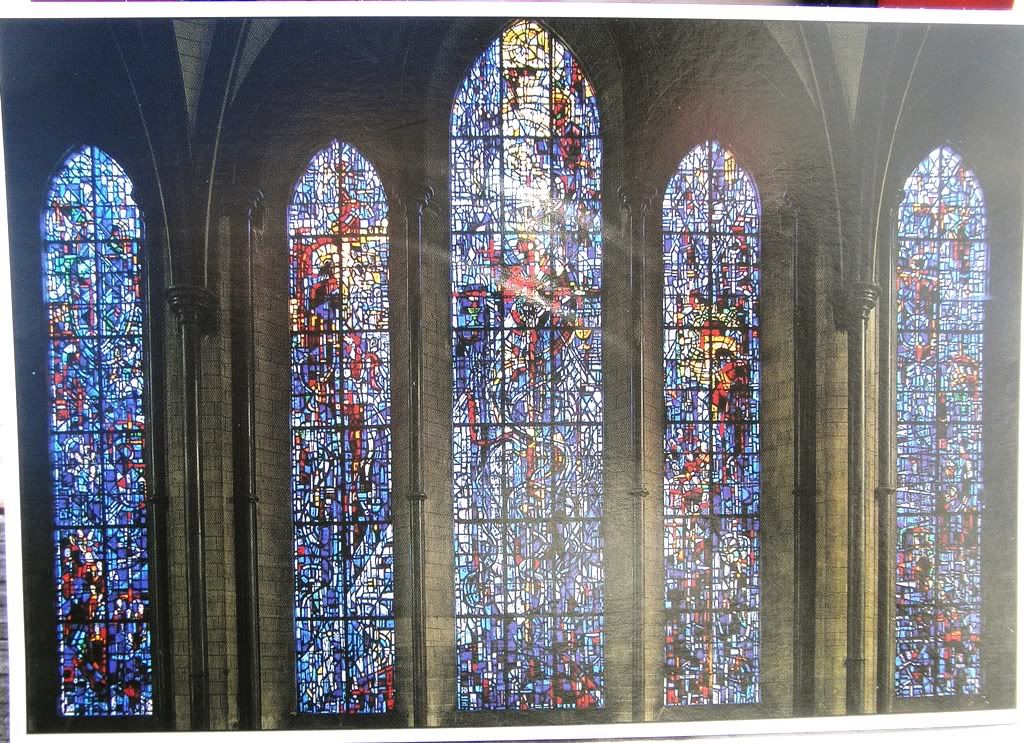
 From Salisbury Cathdral, date 1980, photograph by RJL Smith

This is the Prisoners of Conscience window.  Although we were able to take pictures in Salisbury, the idea of attempting to capture all the detail of this window was overwhelming.  To see the window in place is to be struck by the blues of every shade that make it up.

This window represents people who stand up for truth, no matter what persecution they may endure.  Its theme is as old as man himself. 


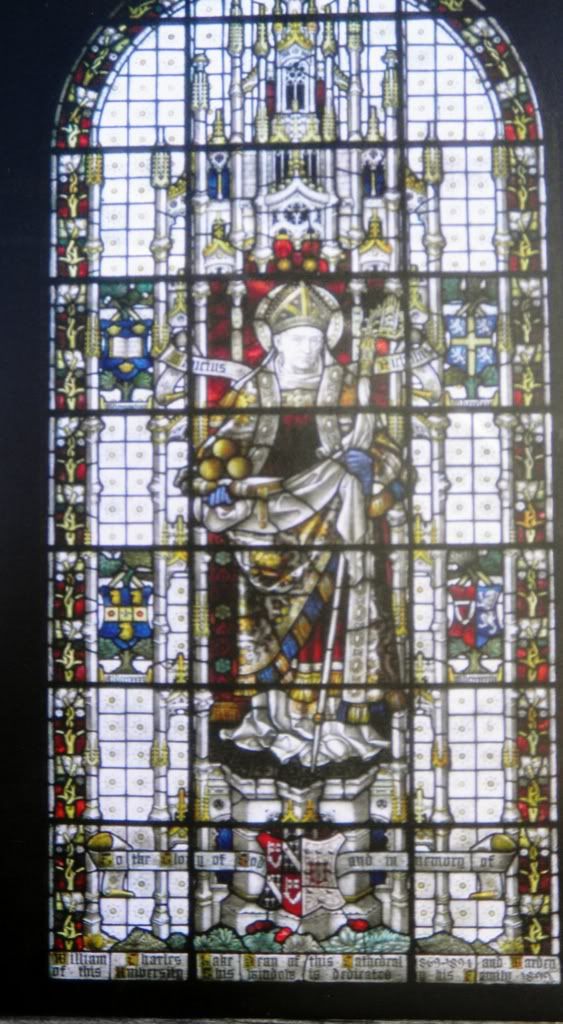
This is the St. Nicholas window from 1899.  It was placed in honor of WIlliam Charles Lake, Dean of Durham Cathedral from 1869 through 1894.

The Dean of the Cathedral (he would be known as the Very Reverend such and so)is the second highest dignitary of the people who look after the Cathedral and its doings: he directs the life and work of the cathedral.  The Canon  (who serves as Sub-Dean and Precentor and who is known as The Reverend Canon Dr. Such and so) is in charge of the liturgy.

There is an entire staff that administers the church, its libraries, etc.  etc.  Interestingly, the most ancient role on the staff belongs not to the Bishop or the Canon or the Preceentor.  The  Sacrist and Seccentor, who is a Minor Canon,  is the oldest of duties, the office dating back to the very earliest years of Durham Cathedral.


This is an exterior shot of Durham in the autumn.  It was done by Heritage House Media.  I have other pictures of the exterior of Durham, some done by me (for which I hope you will forgive me) and some done by my gentle friend Karen.  They'll be in another post.


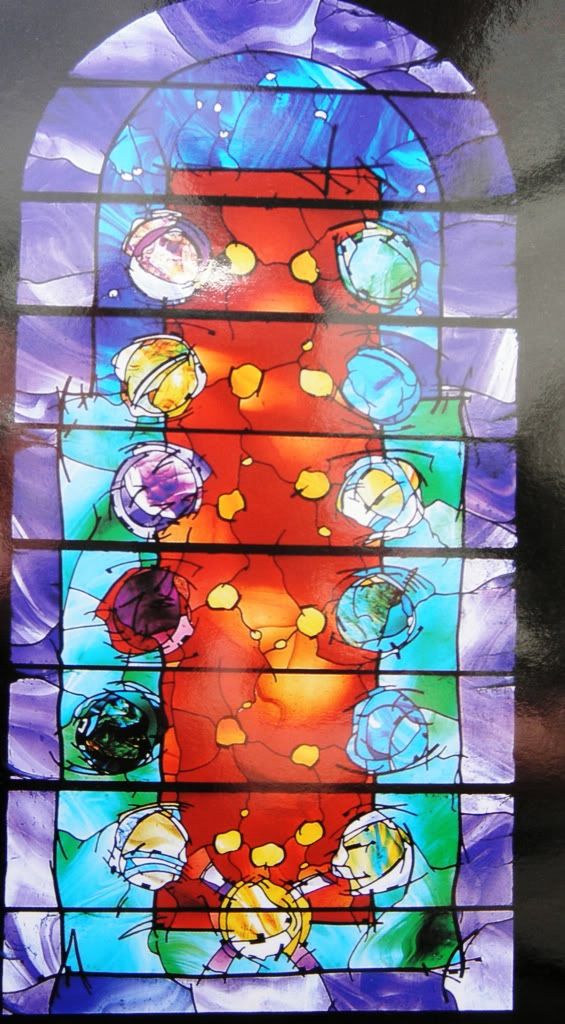
This is The Daily Bread window in Durham Cathedral.  It was commissioned by Marks and Spencer and installed in 1984 on the centenary of the company's founding.  It represents the last supper.  The post card is a knock out, but the window?  Stunning!  And, even though it's relatively modern, it fits right in with everything else just fine.


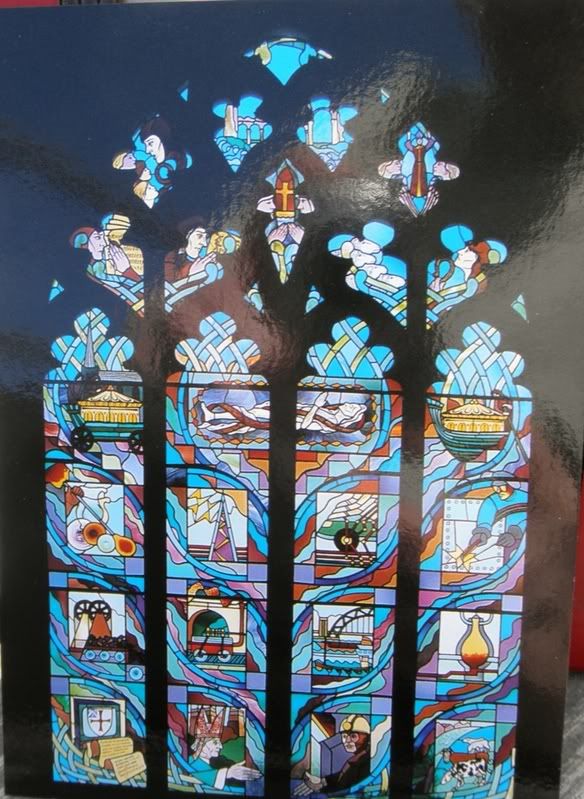
This is the Millenium Window from Durham.  The picture was taken and published by Jarrold Publishing.

The window itself depicts some of the happenings of the 1000 years between the establishment of Durham and 1995 when the window was installed.  Yup - that would be your basic millennium, folks.  I still can't get my mind around the actual age of the Cathedrawl any more than I could at York or Salisbury.  One thousand years.  It boggles the mind (well, it boggles my mind...)


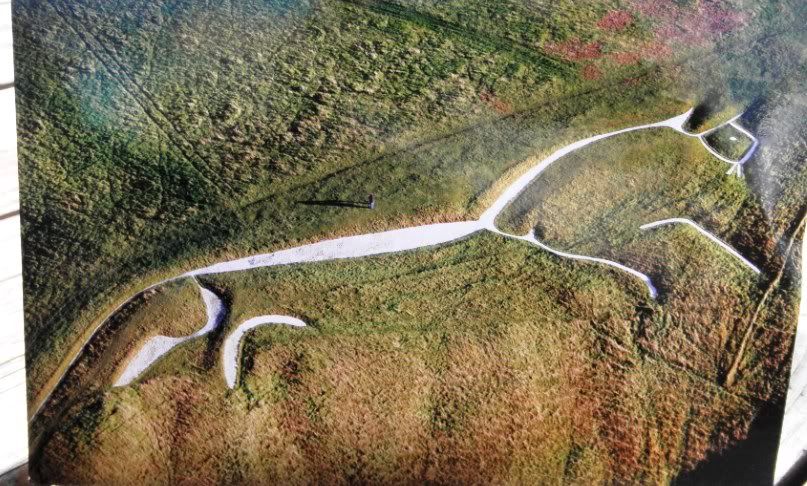
This is the oldest of the chalk down carvings in England, and also the biggest.  This is the White Horse of Uffington in Oxfordshire.  The image's trenches were first scraped through to the chalk underlayment and filled with white chalk rubble between 1200 and 700 BCE (Before the Common Era).  It's been maintained by the residents of the area ever since.

There are a lot of theories as to why the horse and others like it were created since the only way to clearly see that it's a horse is from the air.  Border between tribes?  Some sort of altar to Belinos, a Celtic Sun God?
A representation of Epona, the horse god of the Celts?  It's impossible to know, so feel free to speculate all you'd like.

There are other horses carved in other parts of England, although most of them date within the last two or three hundred years.  Still, they brighten the landscape and make people pause and think, hopefully about whomever made them and why...


What the h-e-double hockey sticks, you ask, startled.  This is a world Heritage Site.  For dinosaur enthusiasts and lovers of the history of dinosaur collecting, this is one of the most fascinating places on the planet - Burgess Shale, eat your heart out!!!!  (Not seriously - the Burgess Shale in Canada is totally excellent as well).

Anyway, it was here that, during her lifetime, Mary Anning (1799-1847) daughter of a fossil enthusiast, made a very small name for herself (she being (a) a woman and (b) lower class in a time when gentlemen with money made up the larger number of naturalists, as they were generally known) by oh...hmmm...let me see -finding and assembling the first specimen in Britain of an Icthyosaurus, the first nearly complete skeleton of a Plesisausaur, the first British skeleton of a pteradactyl, and on and on.  This was long before the days of paleological safaris - she walked along the sea at Broadbench, among other places, at low tide and searched for bones, hauled them back to her family home and preserved them as well as she could.  The bones were sold to institutions by a broker, but at least Ms. Anning received compensation for what was literally a life threatening pursuuit of knowledge.  By the decade before the end of her life, she was recognized for her contributions to the still very young science of paleontology.

The Post Card, which is from a series called Britain from the Air published by the Royal Geographical Society and the Ordnance Survey, shows the famous, Jurassic (watch out for the Allosaurs!  well, not now, of course) Coast, which includes Mary Anning's home town of Lyme Regis.  The unique appearance is a result of the presence of Kimmeridge Clay, which cracks and shatters along the planes of the cracks.  When one walks here, one is walking back over millions upon millions of years.  I am SO going to go there!


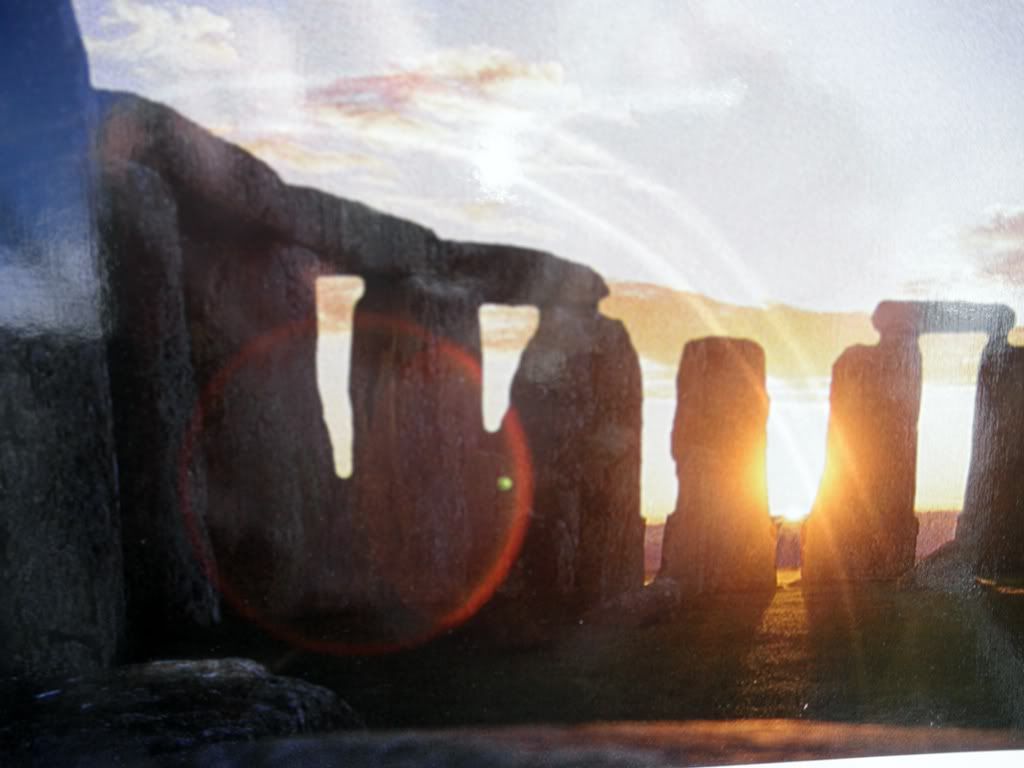
This, of course, is Stonehenge.  Stonehenge is well known to millions of people, so I'm not going to belabor the point and drive you nuts with discussions of the latest and greatest archaeological work on the site.  I think it's most excellent, but I'm a bit stodgy...or something.  This photograh was taken by Nigel Ware and turned into a post card by J. Salmon Ltd.

There are other henges in England.  Indeed, there are other henges within a short drive of Stonehenge.  One such is Avebury.  And that will be the topic of the next post.  Which will be, I have a feeling, later tonight, since I have a short term run to get the granddaughter and play with her for awhile!!!!!

I can now send postcards that I have photographed (the scanner didn't work with them for some reason.  The jpeg that resulted had properties that gave my computer heartburn) and still have the images to remember!  How most exccellently cool is THAT?

More later!!!!


Tuesday, August 16, 2011

Salisbury Part 37 (You mean you didn't read the 34 others? Shame on you!)

Now that I've got you looking for the other parts (well, not really, you know me well enough), I'm going to settle myself and do what little I can to show you the inside of Salisbury Cathedral.  And I must emphasize the little.  I could have taken about 400 pictures and then been a bit short in terms of detail.  As it was, I was so busy standing there with my mouth hanging open going "Oh my - oh my" that I almost forgot to take any!

Some simple dimensions for you:

Plan of the Cathedral

The length of the the Interior:   449 feet (your basic American football field is 100 yards - 300 feet)
Width excluding the transepts (see above): 78 feet
Width with transepts:  204 feet
Height to the ceiling of the nave:  85 feet.  Consider that most homes have 8 foot ceilings and you'll get the general idea, but not the real experience.
Height to the ceiling of the vault:  85 feet excluding the Trinity Chapel.
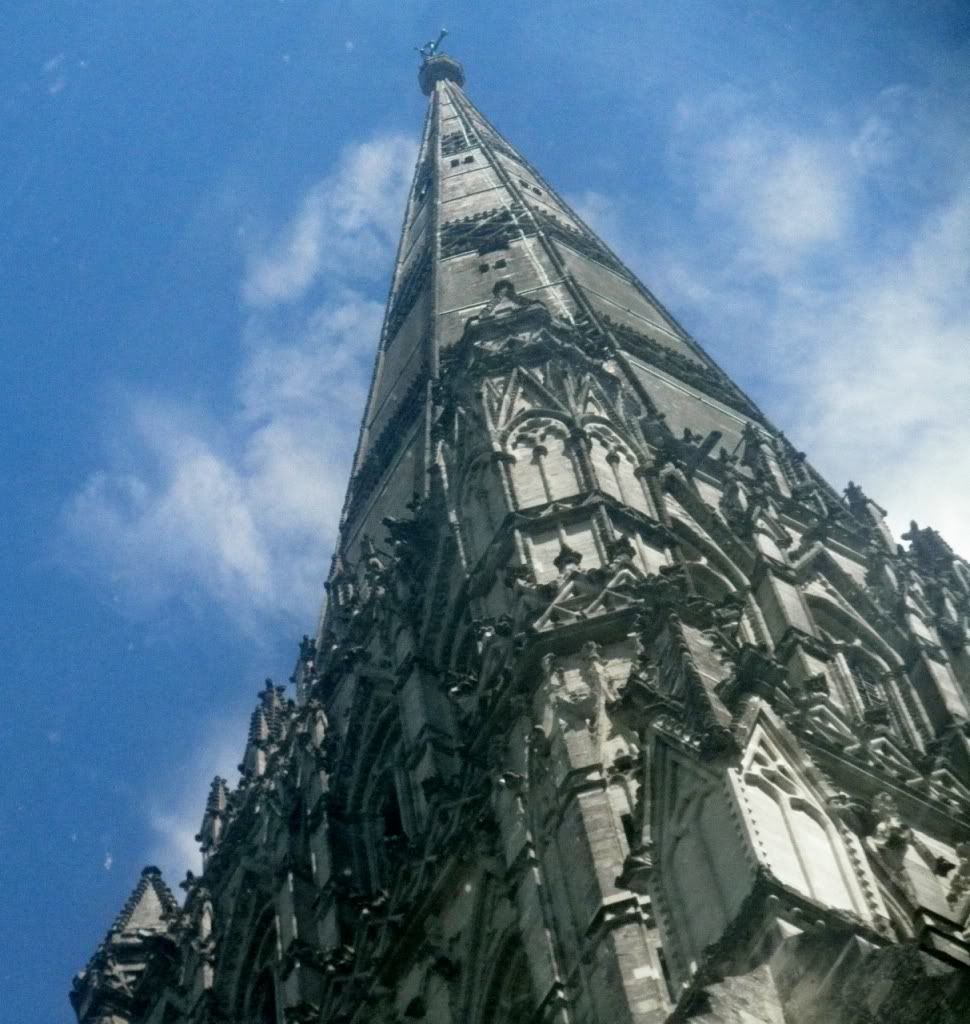
Height of the Spire:   404 feet.

They're really just numbers until you're there in front of the building staring up, or tripping over the front door (because you're staring up).  And then it hits you like a ton of stone (several tonnes, actually).  And there's nothing to say but "Oh my", very quietly.

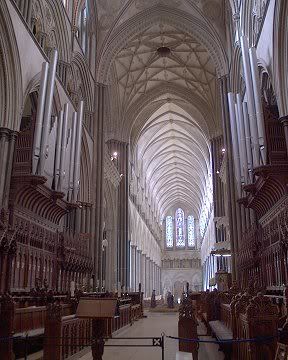
The Interior - taking a picture of the entire interior at the same time is, from a practical standpoint, impossible for people like me who do not have a professional camera to rely on.  So, again, I have borrowed from google images.  All I can ask of you is that you imagine 84 feet straight up and how many ever feet you can come up with along the floor. 


The second picture was taken standing in the area where the choir practices and looking back the other way.  The first picture is showing the choir area and the lecturn to the left and going up the stairs. No, I didn't climb to the pulpit.  I get air sick, and, besides, it would have been rude. Even for me

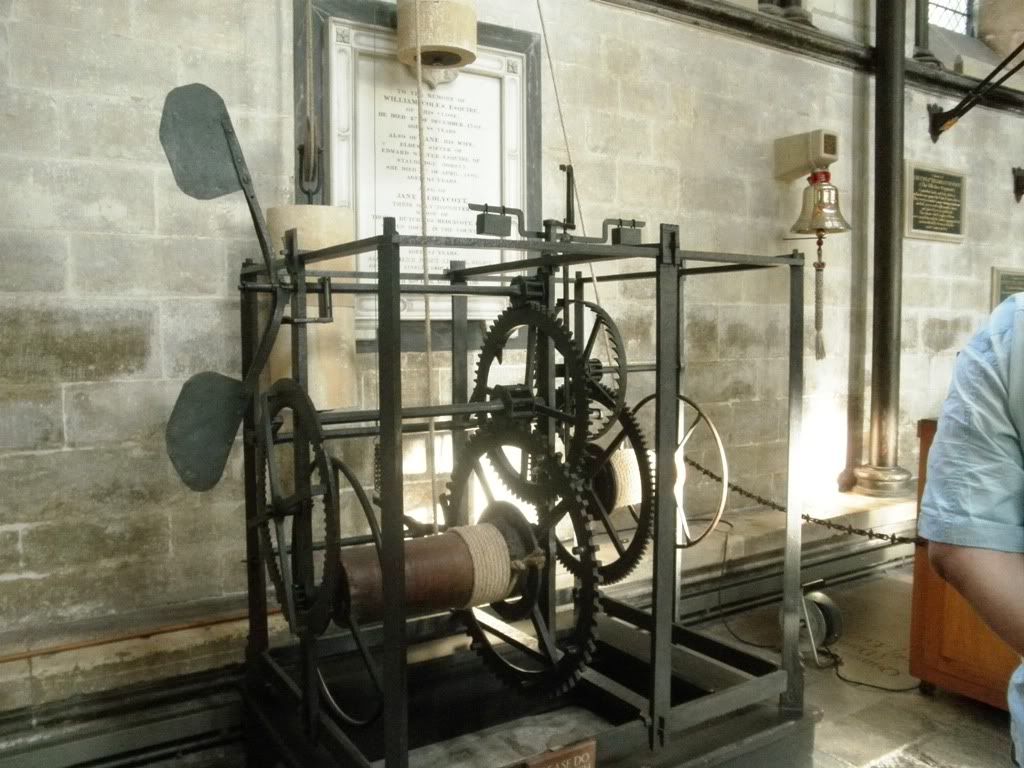
Now, once one passes into the relatively dark interior and looks across the nave, one of the first things that is visible is this!

Anyone have an idea as far as what it is?  And no, it's not a better mousetrap (although, given the size, it might be a better moose trap!)


Now, for the faint of heart, suffice it to say that the contraption is a clock. No moose or mice were harmed in the creation of this clock.  Not only that, this is a clock that was made no later than 1386 and in all probability before.  As the sign says, it didn't tell hours and minutes.  It marked the passage of the hour by ringing a bell that was attached to it and is currently located in the Cathedral Roof Space (i.e., it's attached by rope).

The clock works and was running in quite cheery clockish fashion when I took the picture before the sign above.  And, since it does work and given the building date, it is the oldest working clock in existence.

The entire cathedral is a lesson in history  -  from the stained glass windows to the various tombs and memorials, it's possible to read much about the world that saw the church evolve in the words and sculptures in this vast space. 

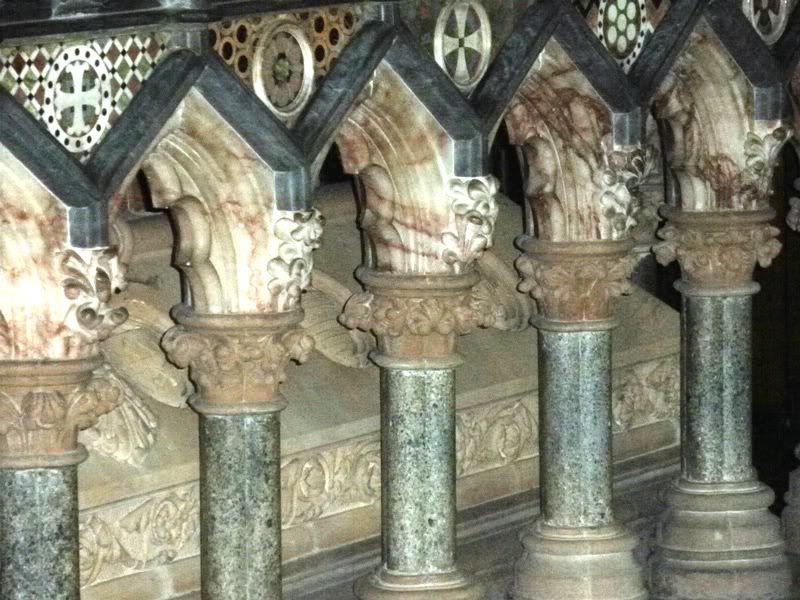
St. Osmund's remains are interred in Salisbury after having been moved from Old Sarum.  He's been moved about a bit inside the Cathedral but is currently near the Trinity Chapel.  No, you wouldn't be looking at bones.  This is the tomb:


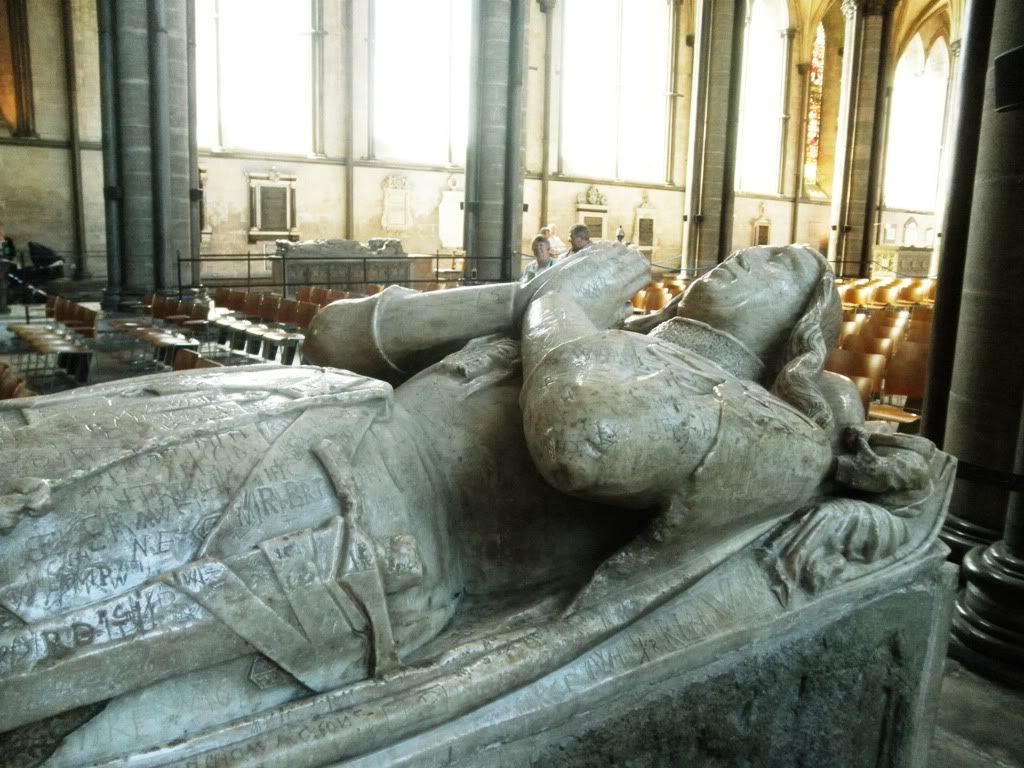
There are tombs of knights and bishops, of children and the prime of life type folk, and there are memorials in stone and precious metal. 


This is Sir John Cheney.  Here's a sign about him.


Here's another perfectly wonderfulbit of sculpture of Giles of Bridport.


And his placard:


with a reflection right in the middle.  Giles of Bridport was consecrated in 1257, died 1262, but in that time founded the college of St. Nicholas de Vaux.  And, oh just for grins - was the Bishop of Salisbury.  Not a bad thing at all.


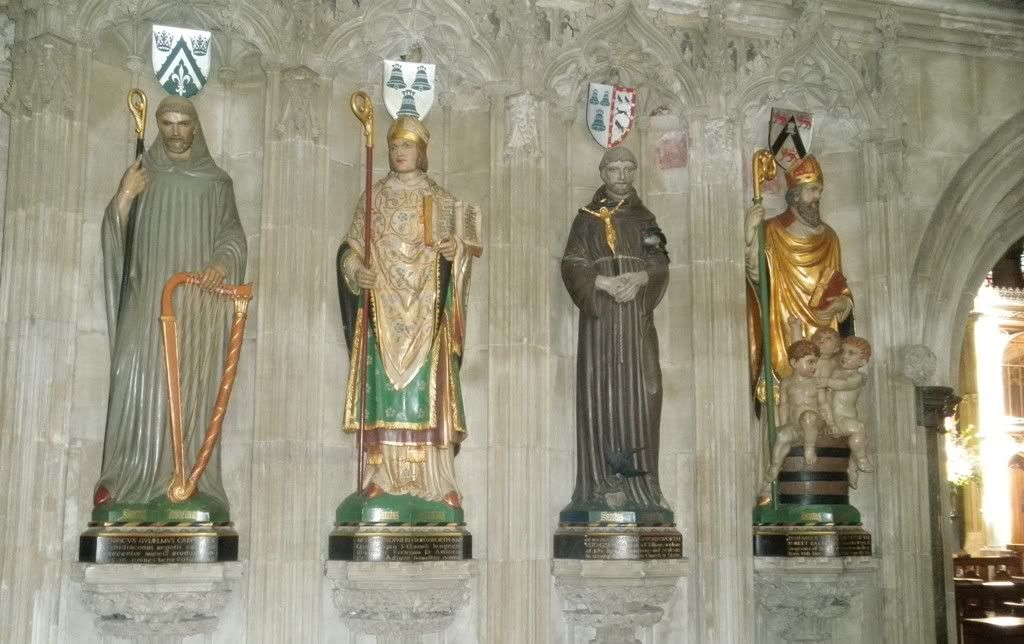
I don't know who this gentleman is other than that he's a bishop of Salisbury.  However, the sculpture is wonderful and the details priceless for anyone seeking a reference for clothing and decoration in the period.


Each figure has its own musical instrument, and the entire screen is in one of the side chapels (I AM going to go back and make my notes much better the second time!!!!). 

The carvings and the sculptures, inside and out, are not only a treat for the eyes, they're a form of entertainment and information for an age before the printing press and before even remote ancestors of the postal system (rapid maildelivery was lost with the fall of the Roman Empire).

There is glass, old and new and newer yet.  The glass above is quite old.  But not the oldest by far.


There is wood in every form and design, veneered and parqueted, marquetried, carved and shaped. 


From the floors to the ceilings, from nave to side chapels, all around you EVERYWHERE in grand silence, there is time watching you watching it.  And everything....slows....down...because you need that time to breathe and take stock of what you've seen, and of what you know you've missed. 

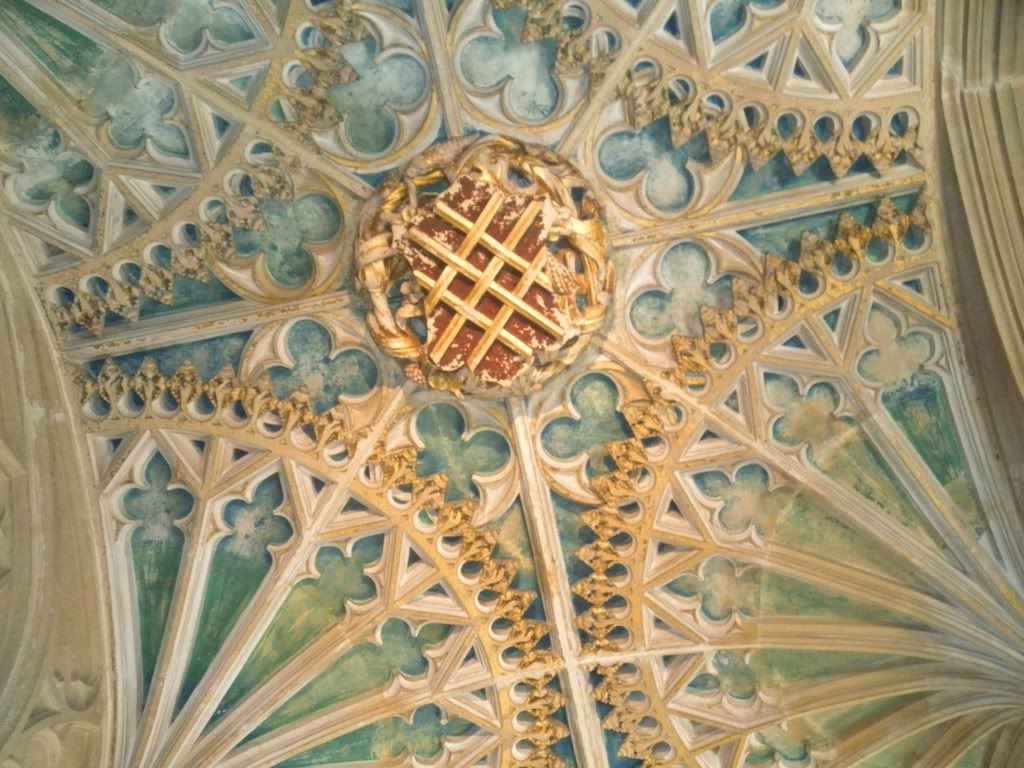
Quiet example:  in the ceiling below, the vaulting is called Fan Vaulting.  It wasn't known at the time that the cathedral was started.  But here it is used as the centures went on.


And, because this IS the 21st century, and because someone might not believe that there is still room to add and change things in this vastness?:


and


and


Which caused both me and Chris some confusion, but certainly piqued our curiosity. (This picture is from Google Images and is from an Art website from England.  The other two are my poor attempts at image capture).  If you want to see more of the statues, you can check them out in google by putting in Sean Henry - Conflux in Images or on the web spot.)

The name of the exhibit and exhibit it is, is Conflux - A Union of the Sacred and the Anonymous.  The sculptor is Sean Henry.  The statues are painted bronze and vary in sise from less that actual human size to much greater.  And they're in numerous places throughout the cathedral and the grounds. 

And, don't you know?  That's what this house of history and worship is - a meeting of the great whose names are remembered, and the thousands upon thousands of the anonymous who have built and rebuilt, sustained and visited and lived near or remembered from afar.

Not a bad place to visit on a July day.  Not a bad place at all.


OH - and, by the bye (I couldln't take a picture of it), just in passing, I also saw one of the four original Magna Cartas (the document was copied four times and King John signed it four times, there not being carbon paper or copies of the mechanical variety then).  And if you think I'm being blase about writing that?  It's because that many exclamation points and underscorings and capital letters and flourishes might be just a tad much to have to put up with!

Ahem - regaining my control (yup, sure), off I go....until the next wander in England - TREES!